Hello. This is InfoTherapy, prescribing healthy information.
I would like to start today's post with the story of a female patient in her 40s who recently visited my clinic. She told me that she had never exercised even once in her life. This was because she was overwhelmed just by balancing work, childcare, and maintaining her daily life. However, recently, she visited the hospital because she felt a throbbing pain and a creaking sensation in the front of her knee whenever she went up or down stairs, and she was diagnosed with chondromalacia patellae.
The patient felt aggrieved. “I have never overworked my knees, lifted heavy objects, or engaged in strenuous sports, so why has my cartilage worn down and weakened? (Chondromalacia) Shouldn't it actually stay healthy from not using it?”
Many people think of cartilage simply as an "eraser that wears away with use." However, the human body is not that simple. Today, from the perspective of a manual therapist with 10 years of experience, I will prescribe objective and realistic methods regarding why knees hurt even without exercise, and how those who have never exercised in their lives should treat their knees. I will write this with a substantial volume of "4,000 characters," incorporating much deeper and richer professional knowledge and case studies than before.
Cartilage lives by eating like a sponge.
Chondromalacia patellae is a condition in which cartilage tissue, which should be firm, becomes soft and weakened. To understand this, you must first understand the unique anatomical structure of cartilage.
How does cartilage, which lacks blood vessels, consume nutrients?
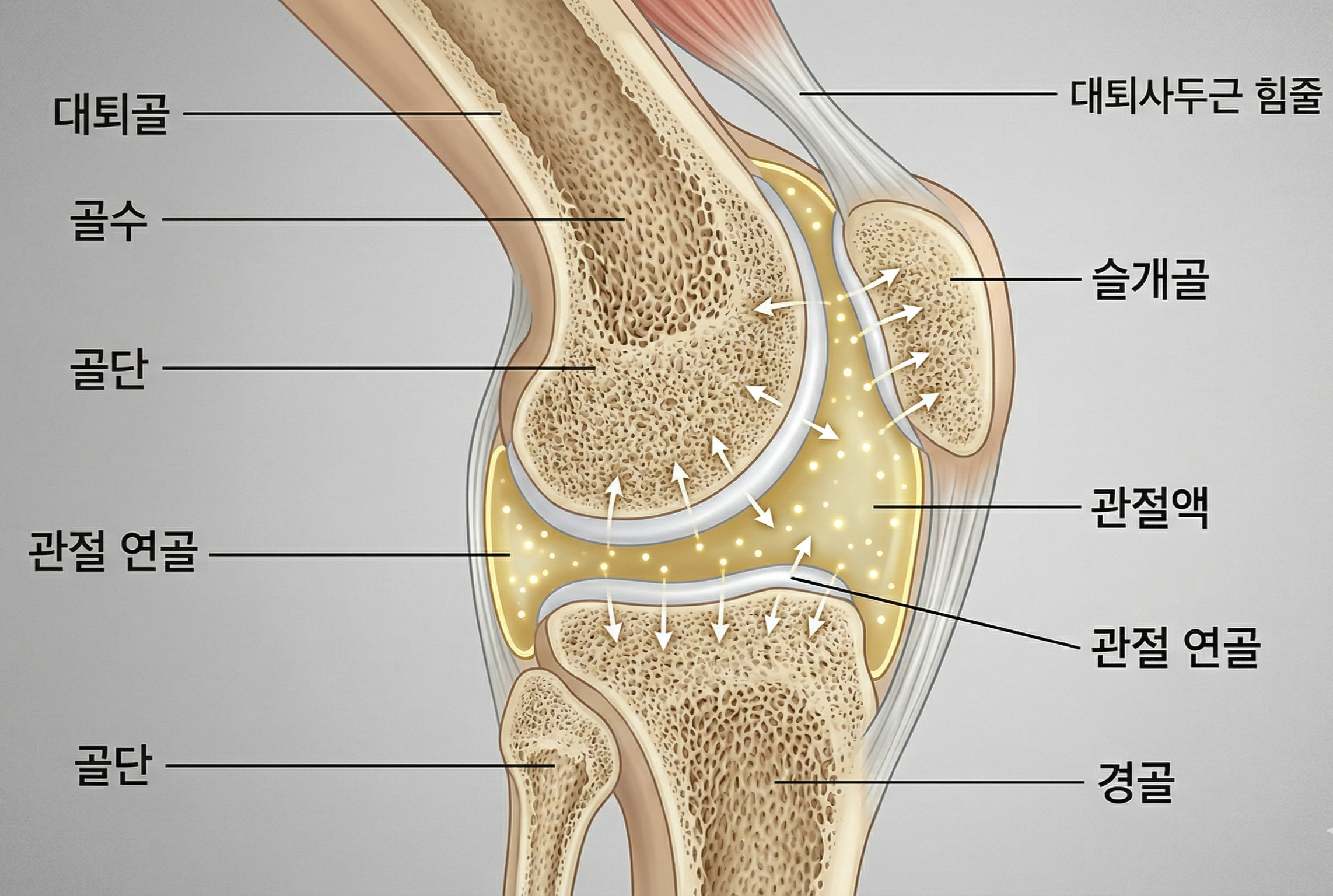
Most organs and muscles in our body receive oxygen and nutrients through blood vessels. However, cartilage has no blood vessels. So how does cartilage survive? It receives its nutrition through the **'synovial fluid'** located inside the knee joint capsule.
Cartilage is just like a kitchen sponge. How do you wet a sponge? You have to squeeze it tightly and then release it to soak up the water. The same applies to cartilage. Only when the process of applying and releasing an "appropriate load (pressure)" to the cartilage—such as through weight bearing or exercise—is repeated can the nutrients and oxygen in the joint fluid penetrate deep into the cartilage.
Not doing it enough, or doing it too much, can become a disease.
In other words, if you only engage in daily activities and do not exercise at all, the cartilage is not subjected to tight squeezing pressure. Cartilage deprived of nutrient supply gradually loses elasticity, loses moisture, and becomes soft. This is the real reason why knee chondromalacia struck a woman in her 40s who had never exercised in her life. Cartilage is structured to become strong only when it is constantly 'used and polished.'.
Conversely, if someone who does not usually exercise suddenly lifts heavy barbells or goes hiking, the cartilage, which has already softened from starvation, cannot withstand the sudden, harsh pressure, causing it to tear or become inflamed and resulting in pain in the front of the knee. Both overtraining and undertraining are fatal to cartilage.
 Image 1: Nutritional supply structure of patellar cartilage and synovial fluid causing chondromalacia
-
This is an anatomical illustration that clearly shows the interaction between the patellar cartilage and synovial fluid through a cross-section of the knee joint.
'5-Minute Daily Running' Prescription for Beginners
While performing manual therapy to loosen the muscles around the legs for the previous patient, I assigned exercises with 'moderate load' as homework to fundamentally recover from knee chondromalacia. If you suddenly tell someone who has never exercised in their life to go to the gym or do squats, they will either give up or their knees will get worse. Therefore, the method I prescribed is very simple.
Run for just '5 minutes' a day
“Patient, starting today, please just go out and walk, whether it is in a neighborhood park or your apartment complex. You are free to walk for as long as you like—10 minutes or 30 minutes. However, during that walk, please run for exactly ‘5 minutes” before going back home.”
The 5 minutes mentioned here do not refer to a full-speed sprint. It means walking lightly and then jogging lightly for about 30 seconds or 1 minute. It is sufficient if you are slightly out of breath. If you run for 1 minute, walk for 3 minutes, run for 1 minute again, and walk for 5 minutes, your workout for the day is finished once the total running time reaches '5 minutes'. This level of light interval training is an exercise that does not strain the knees, while serving as the best remedy by applying moderate pressure to the softened patellar cartilage, allowing it to efficiently absorb nutrients from the joint fluid.
“There were some patients who said, ”Even five minutes is too much.“ To those individuals, I prescribed, ”Run for just one minute and walk for four.‘ With exercise, starting is not half the battle; it is the act of starting itself.
Gradual increase in load on a monthly basis
If you consistently continue this 5-minute daily run for about a month, your cartilage will gradually become smooth and ready to harden.
-
Month 1: Total running time 5 minutes
-
Month 2: Total running time 10 minutes
-
Month 3: Total running time 15 minutes
-
Month 4: Total running time 20 minutes
This is how you gradually increase your running time by just 5 minutes each month. It is the most objective and safe method to simultaneously strengthen your stamina and cartilage while giving your body sufficient time to adapt.
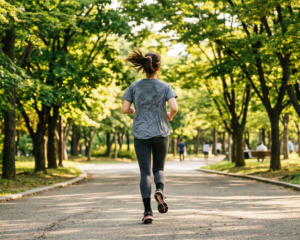 Walking and light interval running recommended as exercises that do not strain the knees
‘'Exercise for health' vs 'Labor/Sports'’
I have established my own philosophy over the past 10 years as a therapist, having treated countless patients. It is that exercise aimed at “health” should not exceed 30 minutes.
The goal of exercise is 'daily life'.
Once exercise exceeds 30 minutes, it crosses over from 'daily routine' into the realm of 'labor' or 'sports.' Our bodies have limited energy. If you drag an exhausted body home after work to sweat it out for an hour or two, your joints and ligaments get no rest, interfering with your main daily activities the next day. Eventually, fatigue accumulates, leading you to give up on exercising.
“I see many people who come to me with their knees further damaged after overexerting themselves with exercise under the pretext of "health." To such people, I prescribe, "Reduce your exercise." Exercise is a means to keep our bodies healthy; it should not be an end in itself.
The Magic of 30 Minutes
“If you have decided to ”start exercising!”, you must finish within 30 minutes. The final goal of the progressive running mentioned earlier is also 20 to 30 minutes. Anything more than that is necessary. Just 30 minutes of moderate load is more than enough to maintain decent health, strong knees, and a balance in daily life. Your cartilage can receive sufficient nutrients from 30 minutes of pressure.
Summary and Infotherapy Prescription
-
Chondromalacia patellae can also occur due to a lack of mechanical compression (movement) that nourishes the cartilage. Cartilage is a 'sponge,' not an 'eraser.'.
-
Exercise beginners should adapt their cartilage by doing interval jogging, which involves breaking down walking and strolling into short segments and running for a total of only 5 minutes.
-
The optimal exercise time to maintain health without knee pain is not to exceed 30 minutes. Balancing exercise and daily life is most important.
If you just lie still because your knees hurt, your cartilage will continue to suffer from malnutrition. Tomorrow, put on comfortable sneakers, go outside, and jog lightly for just five minutes. Your cartilage will start breathing healthily again.
This has been Infotherapy, prescribing healthy information. Thank you.
References (References with Links)
-
Bricca, A., et al. (2018)
-
Research Topic: The Effects of Exercise and Appropriate Load on Knee Cartilage Health
-
View original text from the British Journal of Sports Medicine (BJSM).
-
-
Lo, GH, et al. (2017)
-
Research Topic: Epidemiological Investigation into the Effects of Running History on Knee Osteoarthritis and Cartilage Damage
-
View original text in PubMed (U.S. National Library of Medicine)
-
-
Esculier, JF, et al. (2017)
-
Research Topic: Biomechanical Comparison of Progressive Load Adjustment and Jogging in Patients with Knee Pain
-
See other posts
Thumb throbbing? De Quervain's tenosynovitis: 1-second diagnosis and home care to avoid surgery
3 Simple Stretches to Fix Forward Head Posture (Tech Neck) and Expert Tips