Hello. This is InfoTherapy, prescribing healthy information.
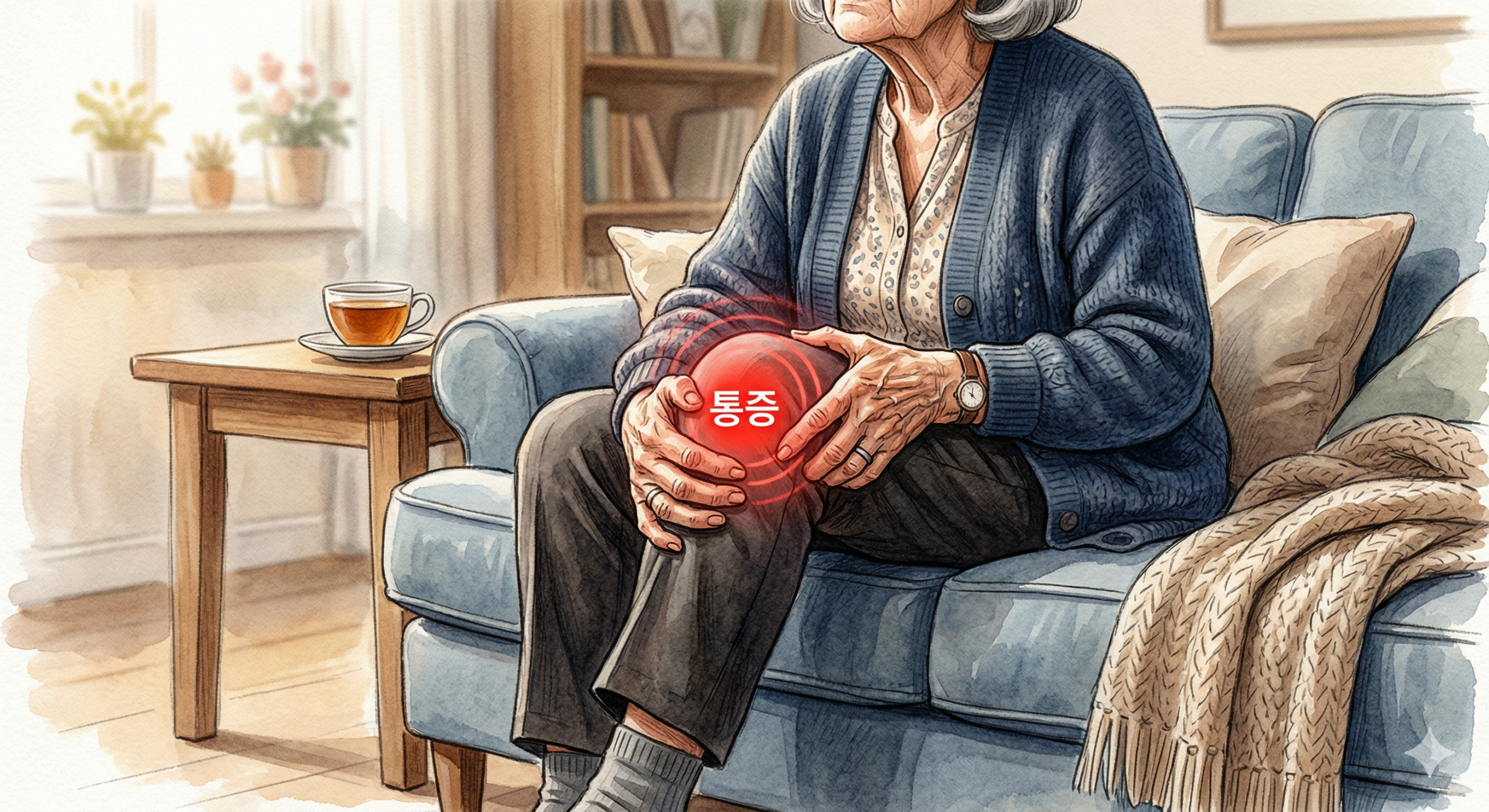
Recently, a female patient in her late 60s held my hand and sobbed in my treatment room. She had suffered for a long time in the pain of her bones rubbing against each other as her knee cartilage had completely worn away, and she had finally mustered the courage to undergo artificial knee joint surgery. She firmly believed that once she woke up in the operating room, she would be able to go hiking and easily hug her grandchildren just like in those TV commercials.
However, the reality was different. Two weeks had passed since discharge, but the knee was severely swollen, and, to make matters worse, it wouldn't bend, making it impossible even to sit on the toilet. “Doctor, I thought I wouldn't be in pain once the surgery was over. But now that it's over, my leg doesn't feel like my own. It hurts so much I want to die.”
Numerous media outlets only emphasize the glamour of the latest surgical techniques, failing to reveal the desperate pain of rehabilitation hidden behind them. Today, with the objective and realistic perspective of a manual therapist with 10 years of experience, I will thoroughly uncover the harsh realities that those considering artificial knee joint surgery 'must' know before lying on the operating table, as well as the last line of defense to avoid surgery.
Knee replacement surgery is not magic that gives you a new knee.
The biggest misconception many patients have is the expectation that removing a damaged joint and inserting a new part will allow them to use it for the rest of their lives without any worries. However, artificial joints are not biological tissues but 'consumables'.
Just like machine parts, artificial joints have a 'lifespan'.
Just as the tires of the cars we drive wear out over time, artificial joints made of metal and special plastic also wear down slightly every time we walk or move. Although materials have advanced dramatically compared to the past, the average lifespan of artificial joints currently accepted in the medical field is around 15 to 20 years.
This has significant implications. What would happen if someone underwent artificial knee joint surgery at an early age, in their 50s or early 60s, simply because of severe knee pain? In this era of centenarians, a terrible situation would arise where the artificial joint wears away by the time they reach their 70s or 80s, inevitably requiring revision surgery.
Revision surgery for an artificial joint is incomparably more dangerous and difficult than the initial surgery. This is because, having already shaved down bone and inserted the device, the surrounding bone dissolves (osteolysis), leaving insufficient bone to anchor the artificial joint. This is precisely why surgery is not the end, and why you must manage your weight and use the joint carefully for the rest of your life.
 What diseases lead us to the operating table?
So, who will eventually be unable to avoid this surgery? The most common cause is terminal (stage 4) degenerative arthritis.
Cartilage acts as a cushion to absorb shock between bones. However, if the cartilage wears away due to prolonged overuse of the knees, the bones come into direct contact and scrape against each other. This causes unimaginable, severe pain, and as the bones are eroded, the legs become severely deformed into an O-shape. When the knees throb even while lying still at night, making it impossible to sleep (nocturnal pain), and the pain cannot be controlled even with painkillers, and walking becomes impossible due to the leg deformity, doctors recommend surgery as a last resort.
The hellish 'knee bending', rehabilitation cannot be done alone
It is too early to be relieved just because the surgery was successful. This is because the real war—the "knee-breaking" rehabilitation—begins immediately after the surgery.
The battle against 'joint adhesions' where the surgical site stiffens
After surgery in which skin and muscles are cut and bones are shaved with a scalpel, our body releases blood and inflammatory substances to heal the wound. During this process, a phenomenon called 'adhesion' occurs, in which the wound site sticks together and hardens.
If you remain lying still due to pain after surgery, your knee will stiffen and become a "stiff leg" that can neither be bent nor straightened for the rest of your life. To prevent this, you must undergo a tearful rehabilitation process just a few days after surgery, enduring excruciating pain as if your flesh were tearing while strapping your leg to a machine (CPM) and forcibly bending your knee. To perform even the most basic daily activities, such as sitting on the toilet and going up and down stairs, the knee must be able to bend at least 120 degrees.
Since you cannot overcome your instincts, hospital rehabilitation is essential.
“"Can't I just exercise at home by myself using a towel while watching YouTube?"”
This is a question I hear very often in the therapy room, but I firmly tell you, "Absolutely not." Humans have a powerful defense instinct to avoid pain. If you try to bend your knees alone at home, you will inevitably stop right before your 'pain threshold' that you can tolerate.
You need to bend it just 10 degrees more to secure the joint's range of motion, but because it hurts, you compromise and stop. Eventually, as time passes and the adhesions worsen, you will have to undergo a procedure again under general anesthesia to forcibly bend the knee and separate the adhesions.
This is why it is essential to receive manual therapy and rehabilitation at a specialized hospital after surgery. The therapist accurately assesses the patient's condition, cheers them on while sweating profusely when they scream in pain and want to give up, and sometimes firmly pushes beyond the limits of instinct to create a full range of motion. Rehabilitation is not something the patient does alone; it is a three-legged race where the therapist and patient share the pain and move forward step by step together.
How to Get Off the Surgery Train (Knee Protection Strategy)
Ultimately, the correct answer is to delay or avoid knee replacement surgery as much as possible if you can avoid it at all costs. If you still have even a little cartilage left, I prescribe two knee protection strategies that you should start implementing right now.
1. The muscles on the front of the thigh (quadriceps) are a 'natural knee brace'.
The massive muscle located on the front of the thigh, the 'quadriceps,' is the part that most perfectly absorbs the load of body weight on the knees. If this muscle is strong, it absorbs the shock that the cartilage would otherwise have to bear.
If you avoid exercise entirely because of knee pain, muscle loss will cause arthritis to worsen more rapidly. You must perform exercises to strengthen your thigh muscles every day, such as riding a low-weight stationary stationary bike (setting the saddle high so that your knees do not bend too much) and sitting in a chair with one knee fully extended for 10 seconds.
2. Abandoning the Korean 'seating culture' that destroys your knees
The reason the knee cartilage of elderly people in Korea wears out particularly quickly is due to their sedentary lifestyle of sitting on the floor. In particular, squatting while working in the fields or mopping, as well as sitting cross-legged, places pressure on the knee cartilage ranging from 7 to 10 times one's own body weight.
This is like crushing a sponge with a heavy iron weight. Starting today, get rid of the habit of sitting on the floor. You should eat at a dining table and watch TV while sitting on a sofa or chair to dramatically extend the lifespan of your knee cartilage. Weight loss is, needless to say, the most reliable knee protector.
Summary and Infotherapy Prescription
-
Since artificial knee joints have a lifespan of 15 to 20 years, surgery at an early age can lead to terrible revision surgery, so it should be delayed as much as possible.
-
The 'knee-bending' rehabilitation to prevent the knee from stiffening after surgery is unimaginably painful, and since it is impossible to do alone due to instinctive pain avoidance, you must seek the help of a professional (manual therapist).
-
To avoid the final moment, you must strengthen your quadriceps (thigh muscles) and immediately stop the squatting culture.
Pain is a warning light sent by our body. If you instinctively avoid the signals your knee sends and neglect them, you will eventually end up on the operating table for irreversible surgery. It is not too late. Do not suffer in silence; please consult with professional therapists at a nearby hospital to find a way to protect your precious cartilage.
This has been Infotherapy, prescribing healthy information. Thank you.
See other posts
Chondromalacia: Why It Occurs Even Without Exercise (5 Minutes of Daily Running for Beginners)
Solve Your Parents' Knee Pain with Just One Thermos?
References
-
Price, A.J., et al. (2018). “Knee replacement.” The Lancet.
-
Research Topic: A Comprehensive Review of the Lifespan, Clinical Outcomes, and Risk of Revision of Artificial Joint Surgery.
-
-
Bade, M. J., & Stevens-Lapsley, J. E. (2011). “Early high-intensity rehabilitation following total knee arthroplasty improves outcomes.” Journal of Orthopedic & Sports Physical Therapy.
-
Research Topic: The Essential Effects of Early High-Intensity Rehabilitation (Bending and Strength Training in the Hospital) After Artificial Joint Surgery on Range of Motion and Recovery of Daily Life.
-
-
Culvenor, A. G., et al. (2014). “Predictors and effects of patellofemoral pain following hamstring-tendon ACL reconstruction.” Arthritis Care & Research.
-
Research Topic: Biomechanical investigation into the effects of quadriceps (front thigh muscle) weakness on increased stress and degenerative changes in the knee joint. (Evidence of the importance of thigh muscle strengthening)
-
I used to be able to find good information from your blog articles.
thank you
Awesome post.
thank you