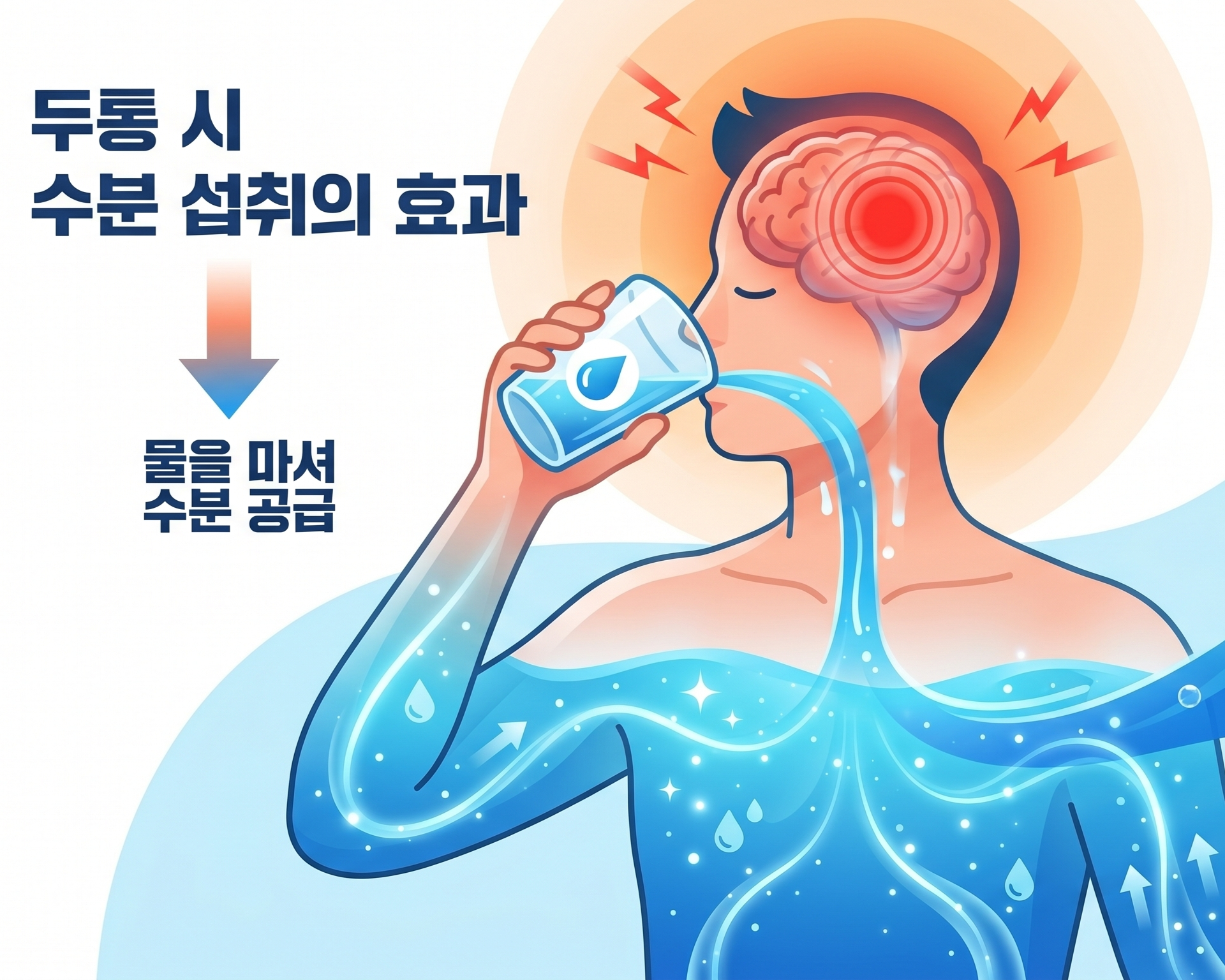
Hello. This is InfoTherapy, prescribing healthy information.
“Doctor, my headaches are so severe that even though I take two Tylenol pills a day, it has absolutely no effect. Could I possibly have a serious brain condition?”
This is the complaint of a patient in their 30s, an office worker, who recently visited my treatment room. They said they suffered from severe headaches and dizziness every day and even had a brain MRI taken at a neurology clinic, but no abnormalities were found. This patient was holding a cold 'iced Americano' in their hand and had recently been following a strict 'low-salt diet' to lose weight.
I gave this patient a very unexpected prescription instead of painkillers. It was to “quit coffee, drink salt water, and go for a light run.” Many people rush to the pharmacy looking for painkillers when they get a headache, but there is definitely another reason hidden behind headaches that do not respond to medication.
Today, from the perspective of a manual therapist with 10 years of experience, the persistent tormentors of modern people Cervicogenic headacheThe reality of [it], the diseases to suspect during headaches, and the surprisingly powerful cause of headaches chronic dehydrationLet's delve deeply into the mechanism of.
For headaches that Tylenol doesn't help, look at the 'neck,' not the brain.
Painkillers block our body's pain signals, but they cannot magically eliminate mechanical pain caused by physically compressed nerves. If you experience persistent headaches that are not due to a brain disorder, you should suspect the neck first.
'Cervical headache' that tingles from the back of the head‘
A significant portion of headaches among modern people is precisely Cervicogenic headacheLooking down at a monitor or smartphone all day in a "turtle neck" posture causes the muscles called the "suboccipital muscles," located at the back of the neck—specifically right below the back of the head—to tighten like rocks.
The 'occipital nerve,' which runs along the back of the head to the crown and even the eyebrow area, passes through these suboccipital muscles. What happens if stiff muscles tightly compress this nerve? Even though there is nothing wrong with the brain, you experience splitting headaches and pain so severe it feels like your eyes are going to pop out. Since this is a cervical headache caused by physical compression of muscles and nerves, taking chemical painkillers (such as Tylenol) does not provide a fundamental solution.
'Red Flags (Danger Signals)' You Must Suspect When Having a Headache‘
Of course, not all headaches should be taken lightly. If accompanied by the following symptoms, it may not be just simple muscle stiffness or dehydration, so you should visit a hospital immediately.
-
A severe headache like a sudden thunderbolt, unlike anything I've ever experienced in my life (suspected cerebral hemorrhage)
-
High fever, vomiting, or stiff neck that cannot be bent forward (suspected meningitis)
-
Symptoms of paralysis such as slurred speech or weakness in one arm or leg (suspected stroke)
If these red flags are absent, our attention must now shift beyond the muscles to the blood and fluids—that is, the 'environment' of our body.
Chronic Dehydration, a Chronic Ailment of Modern People, Causes Headaches
One of the things that surprises me most while consulting patients in clinical practice recently is that, unexpectedly, a huge number of people chronic dehydration The fact is that you are in a state of dehydration. You think you are drinking enough water, but in reality, the moisture inside your body is drying up.
Coffee is not 'water': The diuretic effect of caffeine
A cup of iced Americano on the way to work, another after a meal. Coffee and modern people have an inseparable relationship. However, far from replenishing fluids, coffee (caffeine) causes 1.5 to 2 times the amount consumed to be excreted through urine due to its powerful diuretic effect.
Our brain's 80% is composed of water. As water drains out chronic dehydration When this condition occurs, brain tissue contracts very slightly, pulling the membranes and blood vessels surrounding the brain taut. Additionally, if the volume of blood decreases due to dehydration, the cerebral blood vessels are forcibly expanded to increase the oxygen supply to the brain. These expanded blood vessels stimulate surrounding nerves, causing throbbing migraines and dizziness.
The Fatal Pitfalls of the Low-Salt Diet
Added to this is another fatal habit: an 'extreme low-salt diet' under the pretext of health. Our bodies must maintain a certain salt (sodium) concentration to retain water. (Osmotic pressure)
If you eat only salads or chicken breast and severely restrict salt intake while dieting, your body forcibly expels water to compensate for the lowered sodium levels. No matter how much water you drink, it all just gets excreted through urine and isn't absorbed into the body, becoming a bottomless pit. The combination of salt deficiency and coffee is the worst possible outcome. chronic dehydrationIt occurs and becomes the main culprit behind intractable headaches and chronic fatigue that absolutely cannot be cured with painkillers.
A Manual Therapist's Practical Guide! A Management Routine to Stop Headaches and Dehydration
So, how should you manage these persistent headaches in your daily life? I, too, suffered from frequent headaches in the past, but after 10 years of clinical knowledge and countless experiments on my own body, I discovered the most reliable and side-effect-free optimal headache management routine.
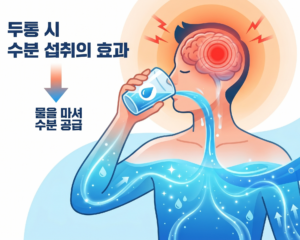
1. 'A glass of water + a pinch of salt' to fill the water of life‘
When I feel the onset of a headache or dizziness, the first thing I do is not look for painkillers. I add a pinch (very small amount) of high-quality natural sea salt or unrefined sea salt to a glass of lukewarm water and drink it slowly.
Plain water takes time to be absorbed and is quickly excreted, but water mixed with a small amount of salt has a concentration similar to body fluids, so it immediately pushes moisture into our body's cells. chronic dehydrationIt produces an effect similar to receiving an IV drip to the cerebral blood vessels and cells that have shriveled up, and surprisingly, you can experience your mind becoming clear within 30 minutes. You must break free from the obsession with an excessive low-salt diet and consume an appropriate amount of sodium about once a day through salty broth or salt to stabilize your nerves.
2. 'A moderate amount of running' to clear blocked cerebral blood vessels‘
If you lie still when you have a headache, blood circulation becomes stagnant, causing the pain to last longer. If your musculoskeletal system is not strained, try going outside for a light jog (running) for about 20 to 30 minutes.
Running at a pace that leaves you slightly out of breath raises your heart rate and dramatically increases blood flow to the brain. As stagnant waste products in the blood vessels are rapidly expelled and fresh oxygen is supplied to the brain, throbbing vascular headaches disappear like magic. However, excessive running to the point of exhaustion can actually generate free radicals and worsen headaches, so the key is to stick to an 'appropriate amount within a maximum of 30 minutes.'.
3. Suboccipital muscle relaxation to relieve cervical headaches
If the back of your head feels heavy even after consuming water and salt and running, as mentioned earlier Cervicogenic headacheYou must resolve this. Lie down with a "peanut ball"—made by taping two massage balls (or tennis balls) together—placed against the indented area where the back of your head meets your neck bones (the suboccipital muscles). Gently press down for about 5 minutes using your body weight, and slowly move your head to the left and right, just 1 cm at a time. You will experience a miracle as the tingling pain extending down to your eyebrows gradually subsides and your vision becomes clear.
Summary and Infotherapy Prescription
-
Headaches that do not go away even with painkillers are not a problem with the brain, but rather tension in the neck muscles (Cervicogenic headacheIt is highly likely that it is either ) or a problem with our body's fluid imbalance.
-
The diuretic effect of coffee and an extreme low-salt diet stimulate cerebral blood vessels chronic dehydrationIt is the biggest cause of...
-
When you have a headache, before taking medicine, try drinking water with a pinch of salt, doing a light 20-minute run, and massaging the suboccipital muscles first.
A headache is an urgent siren from our body crying out, "Something is going wrong!" Do not rely solely on painkillers to unplug that siren. These natural daily routines—drinking water, consuming adequate salt, and walking and running with good posture—are the surest cure for headaches, more so than any expensive miracle drug.
This has been Infotherapy, prescribing healthy information. Thank you.
See other posts
Chondromalacia: Why It Occurs Even Without Exercise (5 Minutes of Daily Running for Beginners)
Solve Your Parents' Knee Pain with Just One Thermos?
References
-
Arca, K. N., & Halker Singh, R. B. (2021). “Dehydration and Headache.” Current Pain and Headache Reports.
-
Research Topic: Clinical review of the pathophysiological mechanisms by which water deficiency (chronic dehydration) stimulates brain shrinkage and vasodilation mechanisms to induce primary headaches and migraines.
-
-
Biondi, DM (2005). “Cervicogenic headache: a review of diagnostic and treatment strategies.” The Journal of the American Osteopathic Association.
-
Research Topic: Diagnosis and manual therapy approach to cervicogenic headache, in which suboccipital muscle tension and mechanical impairment of the upper cervical spine cross-react with cranial nerves (such as the trigeminal nerve) to cause headaches affecting the eyes and the entire head.
-
-
Varkey, E., et al. (2011). “Exercise as migraine prophylaxis: a randomized study using relaxation and topiramate as controls.” Cephalalgia.
-
Research Topic: The effect of aerobic exercise (jogging/cycling) of up to 40 minutes, three times a week, on preventing headaches and reducing their intensity by improving cerebral blood flow (demonstrating an effect similar to that of preventive pain medication).
-